
Ever noticed your once-popular blog posts slowly losing traffic? It’s frustrating. You’ve spent hours researching, writing, and maybe even filming videos, but suddenly, Google seems to have forgotten them.
Here’s the good news: you don’t always need to start from scratch. Often, the smartest move is a strategic content refresh. By giving your old posts a little TLC, you can reclaim lost traffic, improve your Google rankings, and even show up in AI Overviews and Featured Snippets.
In this guide, I’ll walk you through the complete SEO content refresh strategy for 2026. Step by step, with real examples, keyword tips, and actionable advice.
Why Refreshing Content is More Powerful Than Writing New Posts
You might be thinking: “Why not just write new articles?”
Here’s the thing: Google already trusts your old pages. They have backlinks, authority, and historical performance data. Updating them doesn’t just signal freshness; it reinforces expertise, authority, and trust (E-E-A-T).
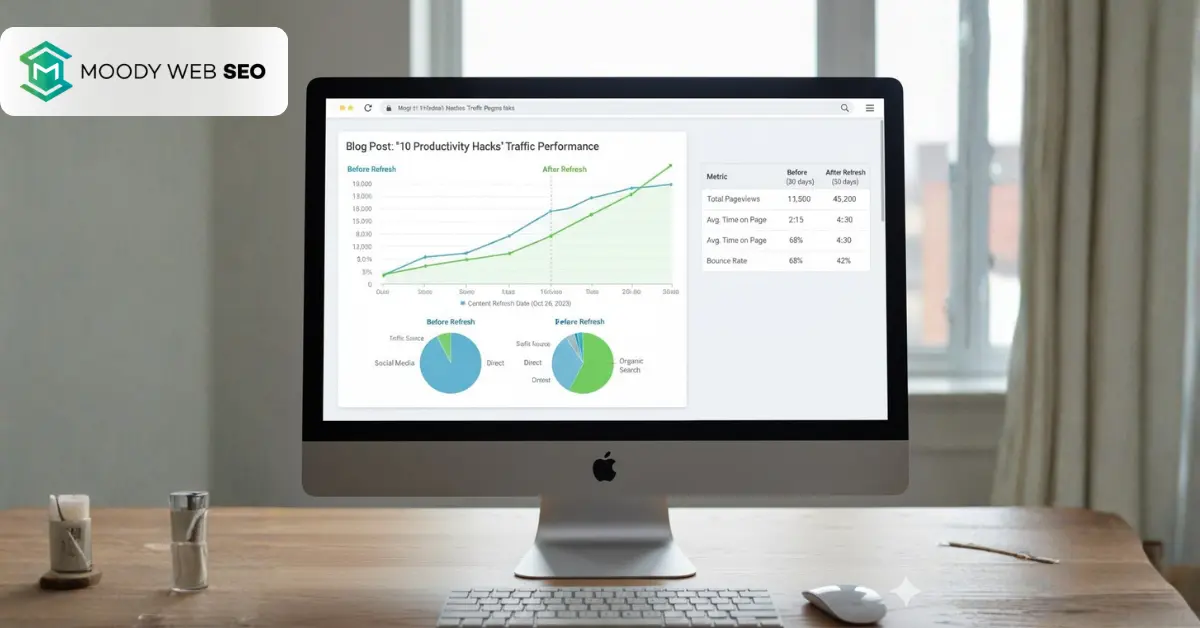
Other reasons a content refresh beats starting over:
- Recover lost traffic fast: Minor tweaks can restore rankings.
- Improve click-through rates (CTR): A better title or meta description can pull in more readers.
- Stay relevant for AI search tools: LLMs like ChatGPT, Perplexity, and Claude prioritize recent, human-sounding content.
- Show authority and trust: Regular updates prove you’re on top of your niche.
Think of your website like a garden. You don’t tear it down every season—you prune, water, and plant new seeds. That’s how content grows stronger.
Step 1: Audit Your Content to Find Low-Hanging Fruit
Not every post needs a refresh. Some are doing fine; others are quietly dying. The first step is to figure out which posts are worth updating.
Optimisation Tools You’ll Need
- Google Search Console (GSC): Track traffic drops, impressions, CTR, and keyword rankings.
- Analytics (GA4 or Universal Analytics): Compare year-over-year performance.
- Crawl tools (Screaming Frog, Ahrefs, SurferSEO): Identify broken links, outdated internal links, and page health.

How to Spot Low-Hanging Fruit
- Pages ranked #8–20 in Google (almost there).
- Posts with high impressions but low CTR.
- Content with outdated stats, examples, or screenshots.
- Posts that were previously performing well but dropped after Google updates.
Mini Example: A travel blog updated its “Patagonia Itinerary” article with 2025 routes and hotels. Within six weeks, it jumped from page 3 to page 1.
Dead Wood Rule
Some content simply cannot be saved. For those:

- Delete posts with no backlinks and no value.
- No-index pages needed internally but irrelevant publicly.
Clean sites = happier Google = better rankings.
Step 2: Refresh Content Like a Pro
A refresh is more than rewriting a few lines. It’s about creating real value and improving the user experience.

- Example: “10-Day Patagonia Itinerary (2025 Update): Where to Go, Sleep & Eat”
1. Rewrite Titles & Meta Descriptions for Clicks
Your title is the first impression. Make it clear, human, and clickable.
2. Add Fresh Insights, Data, and Examples
Update your content with:
- New statistics, industry updates, or research
- Updated screenshots, charts, or graphics
- Case studies or personal experience stories
Real Example: An SEO guide expanded from 1,200 to 1,800 words with new expert quotes and FAQs, resulting in a 42% ranking boost within six weeks.
3. Improve Readability
- Short paragraphs (less than 100 words)
- Bullet points and numbered lists
- Subheadings that match search intent
- Conversational tone and occasional interjections like “Here’s the thing” or “Believe it or not”
4. Internal Linking
Internal links tell Google which pages matter most.
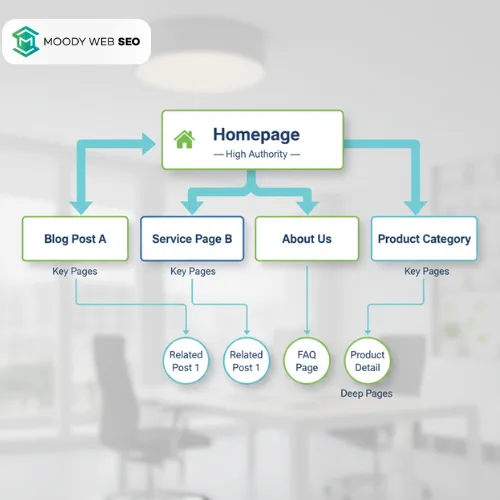
- Link supporting content to one main service page.
- Use varied anchor texts naturally: “car registration” here, “vehicle renewal” there.
- Remove broken, irrelevant, or duplicate links.
5. Strengthen Author Credibility
- Include author bio with expertise and experience.
- Example: “Written by Nina Perez, SEO strategist with 8+ years helping small businesses grow.”
- Mention any certifications, awards, or real-life projects.
Step 3: Optimize Technical SEO & Entity-Based SEO
Content refresh isn’t just about words—it’s about technical health and semantic optimization.
Entity-Based SEO
- Include relevant people, places, organizations, and topics in the text.
- Add schema: Article, Service, Person, LocalBusiness. (Schema.org)
- Structured data helps Google and AI tools understand your content.
Technical SEO

- Ensure fast page speed (LCP <1.5s)
- Mobile-friendly design
- Fix redirects and broken pages
- Add multimedia: videos, charts, and infographics boost engagement
Tip: A slow page or messy site will hurt rankings, no matter how great the content is.
Step 4: Local & Voice Search Optimization
Local SEO Tips

- Use natural location keywords: “Best coffee shop in Austin” sounds real; “Austin coffee keyword” does not.
- Update Google Business Profile: photos, hours, reviews.
- Add LocalBusiness schema for better AI recognition.
- Earn backlinks from local partners or directories.
Voice Search Tips

- Write conversationally. Example: “You can fix a leaky faucet by…”
- Keep answers short and clear (30–40 words).
- Include FAQ sections with natural questions.
- Add FAQ schema to help Google Assistant, Siri, and Alexa.
Example: A Denver salon optimized for “hair color expert near Cherry Creek” and appeared in Google Maps results within 14 days
Step 5: Reindex & Track Your Updates
After refreshing content:

- Republish with a new timestamp
- Request indexing in GSC
- Track rankings, impressions, CTR, and dwell time for 60–90 days
- Document what worked for future updates
Small, consistent updates are better than one massive overhaul every few years.
Step 6: How Often Should You Refresh Content?
| Content Type | Frequency | Example |
| News/Trending Posts | Weekly | “Google Algorithm Update Insights” |
| Competitive National Pages | Monthly | “SEO Tools Comparison 2025” |
| Local Business Pages | Quarterly | “Best Car Title Service in Austin” |
| Evergreen Guides & Resources | Biannually | “Complete On-Page SEO Checklist” |
The more competitive the keyword, the more often you update.
Step 7: Keep a Routine
- Audit top posts every 3 months
- Conduct sitewide audits twice a year
- Refresh after every major Google update
Consistency compounds SEO growth. Think of it like watering a plant—small care keeps it alive and thriving.
Quick Recap
- Audit content and identify opportunities
- Rewrite titles, meta descriptions, and internal links
- Add fresh data, examples, and FAQs
- Optimize technical SEO and structured data
- Reindex and track performance
- Repeat consistently
Final Thoughts
Refreshing content isn’t about chasing algorithms—it’s about staying useful. Pick one underperforming post today, tweak the title, update a few lines, add fresh examples. That small effort could spark your next big traffic jump.